
[1]Public-health or regulatory agency
Influenza (seasonal) — fact sheet
World Health Organization
- Published / updated:
- February 28, 2025
- Accessed 12 Sep 2026
Influenza
Explore how influenza changes, why vaccines are regularly updated, and what science is uncovering about broader, longer-lasting protection.
A guide to influenza: the virus, how it changes, what that does to vaccines, and what the evidence actually shows. Every figure on this page links to the document it came from.
Understanding influenza
Influenza is an acute respiratory infection caused by influenza viruses. It is not “a bad cold”: it has a distinct virus, a distinct seasonal pattern and a measurable burden of hospitalization and death.
The two types that drive seasonal flu in people.
Seasonal flu. Pandemic potential.
The only type known to have caused pandemics.
Seasonal flu.
B/Victoria circulates. B/Yamagata has not been detected since March 2020.
A different role in human health.
Usually mild illness
Does not cause epidemics.
Primarily affects cattle
Not known to cause illness in people.
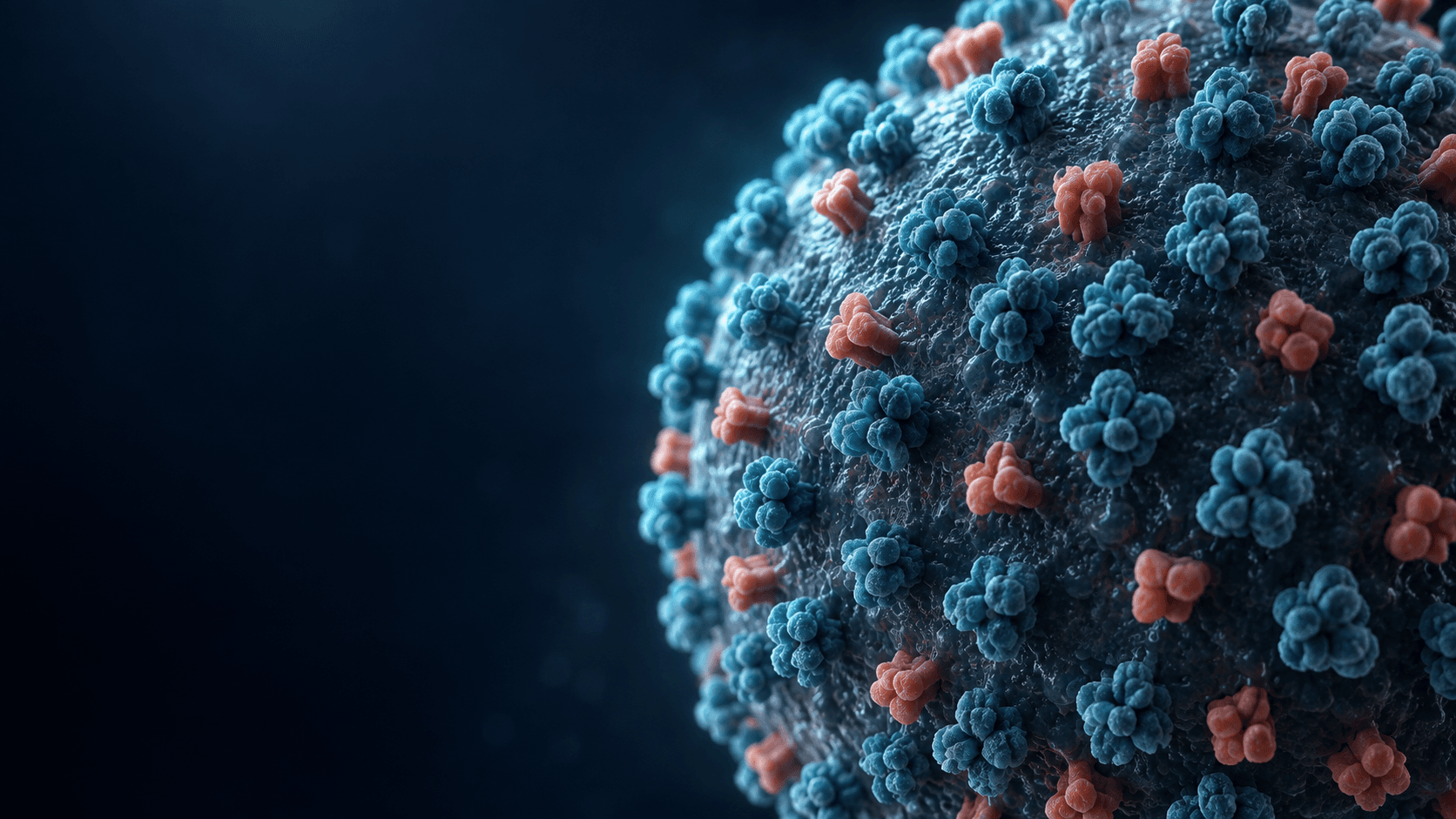
Influenza A and B viruses carry their genome as eight separate segments of RNA rather than one continuous strand. The two proteins studding the outside — hemagglutinin, which binds the virus to cells, and neuraminidase, which releases new particles — are what the immune system mostly “sees” and what the vaccine mostly targets.
The virus spreads easily from person to person, mainly in infectious droplets when people cough or sneeze, and indirectly through respiratory secretions on hands and surfaces; aerosol transmission also plays a role. The incubation period is about two days, ranging from one to four.
Virus is found in nose and throat samples from about one day before symptoms start to five to seven days after — so people are infectious before they know they are ill.
Most people recover within a week without medical care, but severe cases can involve pneumonia, myocarditis (inflammation of the heart muscle) or encephalitis, and secondary bacterial pneumonia is a typical complication. The risk of severe disease is highest in older people and in those with chronic conditions.
This table is about biology, not diagnosis. Symptom overlap between these infections is large, and the only way to tell them apart in an individual is a laboratory test.
| Influenza | Common cold | COVID-19 | |
|---|---|---|---|
| Cause | Influenza A and B viruses | Many different viruses (rhinoviruses, common-cold coronaviruses and others) | SARS-CoV-2 |
| Onset | Typically sudden, with fever | Typically gradual | Variable |
| Seasonal pattern in temperate regions | Winter epidemics | Year-round, more in colder months | Waves not confined to winter |
| Vaccine | Yes — composition reviewed twice a year by WHO | No | Yes — composition also periodically updated |
Signature module
Seven connected diagrams, from the virus particle to the vaccine calendar. Step through them in order, switch between plain language and scientific detail, and open the sources behind any statement. Nothing in this module is a simulation of real numbers: where a picture is conceptual, it is labeled as such.
Step 1 of 7
An influenza particle is a small envelope studded with two kinds of protein spikes and carrying its genetic instructions inside as eight separate pieces. Select a part to see what it does and why it matters for vaccines.
How to read these diagrams: they show mechanisms, not measurements. Shapes and distances are chosen for clarity, not drawn to scale, and no diagram predicts how well a particular vaccine will work in a particular person.
Select a structure
Binds the virus to sialic-acid receptors on the cell surface and drives fusion with the cell membrane. Gives influenza A its “H” number.
The main target of neutralizing antibodies and the main site of antigenic drift. The head domain changes far more than the stem.
Putting the module together: influenza viruses accumulate genetic change continuously, and some of that change alters what antibodies recognize (drift). Several types and subtypes circulate at once, with a shifting balance across regions and months. Vaccine composition has to be recommended months before the season it serves, on the basis of what is circulating at the time — so it is a forecast, and forecasts sometimes miss. Meanwhile, the protection a vaccine gives fades over months and depends on age, prior exposure and subtype.
That is why the composition is reviewed every year and updated when needed, and why annual vaccination is recommended even in years when nothing changes — two different reasons that are often conflated. A vaccine that made both unnecessary would have to aim at the conserved parts of the virus; that work is under way and, as of September 2026, still in early clinical stages.
Global and regional burden
Influenza deaths are rarely recorded as such on death certificates, so headline burden figures are estimates produced by models from surveillance data. This section keeps observations and estimates apart and says what each number is a denominator of.
Annual estimates from WHO’s fact sheet (updated 28 February 2025). The death figure counts respiratory deaths only and is a modeled range; deaths from cardiovascular and other complications are not included. WHO also notes that 99% of deaths in children under five with influenza-related lower-respiratory infections occur in developing countries.
From ECDC’s factsheet (last updated 12 April 2022). The wide range reflects season-to-season variation and modeling uncertainty. ECDC does not publish a season-by-season series comparable to the US one below, so none is charted here.
* Preliminary · ┆ Not estimated by the source
In temperate climates, seasonal epidemics occur mainly during winter; in tropical regions influenza may occur throughout the year, with outbreaks that are more irregular. In Europe, epidemics generally fall between November and April.
Season size varies several-fold: CDC’s US estimates range from 9.4 million symptomatic illnesses in 2011–12 to 51 million in 2024–25 (preliminary). The 2020–21 season, during COVID-19 restrictions, had too little influenza to estimate at all.
Data not available
Country-level influenza surveillance differs enormously in testing intensity, so mapping raw FluNet counts would mostly show where testing happens, not where influenza is. Rather than draw a misleading map, this page links to WHO’s FluNet, where positivity and type/subtype data can be explored country by country with the surveillance context attached.
Open WHO FluNet ↗Vaccines and treatments
All statements about approvals and recommendations here refer to the United States for the 2026–27 season unless stated otherwise, because that is where the most complete public documentation exists. Products and age indications differ in the EU and elsewhere.
Candidate vaccine viruses are grown in embryonated hens’ eggs, inactivated and purified. The oldest and still the most widely used method; an inactivated vaccine was licensed for civilian use in 1945.
US 2026–27: Fluarix, FluLaval (GSK); Fluzone and Fluzone High-Dose (Sanofi). Ages 6 months and over; High-Dose 65 and over.
Growing viruses in eggs can introduce egg-adapted changes that make the vaccine virus differ from circulating viruses; a 2017 study attributed reduced 2016–17 effectiveness against A(H3N2) in part to a glycosylation site absent from the egg-adapted strain.
Viruses are grown in mammalian cell lines instead of eggs; since 2019–20 all candidate viruses used in Flucelvax are cell-derived, avoiding egg adaptation.
US 2026–27: Flucelvax (Seqirus), ages 6 months and over.
CDC notes cell-based production might allow faster start-up in a pandemic because cells can be banked and frozen; the page gives no timeline comparison.
The HA protein is produced directly by recombinant methods; no candidate vaccine virus is needed and there is no egg adaptation.
US 2026–27: Flublok (Sanofi), ages 9 and over.
Preferentially recommended, alongside high-dose and adjuvanted vaccines, for adults 65 and over in US guidance.
An egg-based inactivated vaccine formulated with an adjuvant to strengthen the immune response in older adults.
US 2026–27: Fluad (Seqirus), ages 65 and over.
One of the three preferentially recommended options for adults 65 and over.
Weakened viruses given as a nasal spray.
US 2026–27: FluMist (AstraZeneca), ages 2 through 49.
Not for people 50 and over or under 2 in the US.
mRNA encoding HA is delivered in lipid nanoparticles, as in COVID-19 vaccines.
US: mFLUSIVA (Moderna), approved 5 August 2026 for adults 50 and over; company states it expects availability for the 2026–27 season. Under review in the EU, Canada and Australia (company-reported).
Not yet listed on CDC’s 2026–27 vaccine summary as of 1 September 2026. Approval for those 65 and over is accelerated and contingent on post-marketing evidence.
For 2026–27, WHO recommended trivalent vaccines containing A/Missouri/11/2025 (H1N1)pdm09-like, A/Darwin/1454/2025 (H3N2)-like and B/Tokyo/EIS13-175/2025 (B/Victoria)-like viruses for egg-based products, with different reference viruses for cell-, recombinant- and nucleic-acid-based products. All US vaccines have been trivalent since 2024–25, when the B/Yamagata component was removed.
CDC estimates effectiveness each season with a test-negative design: among people seeking care for respiratory illness, it compares vaccination rates in those who test positive for influenza with those who test negative, adjusting for site, age, sex, underlying conditions and time from onset to enrollment.
VE Preliminary 95% CI 95% CI ∋ 0┆ Not estimated by the source
Four antivirals are FDA-approved and recommended by CDC (page dated 10 March 2026). CDC recommends starting treatment as soon as possible for hospitalized patients, those with severe or progressive illness and those at higher risk; for otherwise healthy outpatients, within two days of onset. EU indications differ.
Neuraminidase inhibitor
Oral
Treatment from 14 days; prophylaxis from 1 year (US label)
Neuraminidase inhibitor
Inhaled
Treatment from 7 years; prophylaxis from 5 years; not for people with underlying airway disease
Neuraminidase inhibitor
Intravenous
Treatment from 6 months; not recommended for prophylaxis
Cap-dependent endonuclease (polymerase) inhibitor
Oral, single dose
Treatment and post-exposure prophylaxis from 5 years
CDC describes resistance among circulating viruses as currently very low but able to change; reduced susceptibility has emerged in immunocompromised patients and in children treated with baloxavir. WHO’s February 2026 report found no evidence of reduced baloxavir susceptibility among the B/Victoria viruses examined.
Science and discovery
Each card states what was found, why it matters for vaccines, and what the finding cannot tell us. The evidence label is the page’s own judgment of the source’s strength.
No confirmed detections of circulating B/Yamagata lineage viruses have been recorded anywhere in global surveillance after March 2020.
By placing viruses on an “antigenic map” from ferret antisera data, Smith and colleagues showed in 2004 that A(H3N2) evolved antigenically in clusters, with punctuated jumps, while genetic change was gradual; some single substitutions had a disproportionately large antigenic effect.
Using all known human cases of H5N1 and H7N9, Gostic and colleagues found that a person’s first influenza A infection confers lifelong protection against severe disease from novel HA subtypes in the same phylogenetic group: 75% against severe infection and 80% against death.
Contemporary A(H3N2) viruses carry a glycosylation site in antigenic site B that the egg-adapted 2016–17 vaccine strain lacked; antibodies raised by that egg-grown strain poorly neutralized the glycosylated circulating virus.
In US network data pooled over 2011–12 to 2014–15, effectiveness fell by about 7 percentage points per month for A(H3N2) and B and 6–11 per month for A(H1N1)pdm09, while remaining above zero for at least five to six months.
In 2011 a novel orthomyxovirus with seven RNA segments, about 50% amino-acid identity to human influenza C, was isolated from pigs in Oklahoma; it is now classified as influenza D and is mainly found in cattle.
A first-in-human phase 1 trial of a group 2 HA stabilized-stem ferritin nanoparticle vaccine (25 adults) was safe and induced stem-binding and neutralizing antibodies that stayed above baseline at 40 weeks, including cross-reactive H3 and H7 binding.
An H1N1 virus with genes of avian origin infected about 500 million people — a third of the world’s population — and killed at least 50 million worldwide, about 675 000 in the United States (historical estimates).
Market and industry
This section reports only what audited filings, company results announcements and regulatory documents say. Commercial market-size forecasts are not reproduced: their methods are opaque and they are not evidence.
For 2026–27, CDC lists products from four manufacturers: GSK (Fluarix, FluLaval), Sanofi (Fluzone, Fluzone High-Dose, Flublok), Seqirus (Flucelvax, Fluad) and AstraZeneca (FluMist). Moderna’s mFLUSIVA was approved on 5 August 2026 and is not yet on that list as of 1 September 2026.
Company-reported: full-year 2025 sales of the “Influenza, COVID-19” vaccines line were €2 314 million, down 5.8% at constant exchange rates, of which €1 328 million in the United States. Fourth-quarter sales rose 31.5% to €575 million, which Sanofi attributed to more circulating virus and a higher vaccination rate than anticipated. The line combines influenza and COVID-19 products; an influenza-only figure is not disclosed.
Company-reported, year to 30 June 2025: CSL Seqirus revenue US$2 166 million, up 2% at constant currency; Fluad sales US$901 million (down 14%) and Flucelvax US$474 million (down 12%), which CSL attributed to significantly lower immunization rates, particularly in the US, partly offset by about US$150 million of H5 avian-influenza pandemic-preparedness contracts. CSL announced its intention to demerge Seqirus as an ASX-listed company before the end of its fiscal 2026.
Cell-based, recombinant and adjuvanted products carry US preferential recommendations for older adults, and the first mRNA seasonal vaccine was approved in August 2026. Whether these shift market share is not something this page can verify from public filings, and it does not claim to.
No independent, methodologically transparent estimate of the global influenza vaccine market was identified among the sources reviewed for this page. Figures circulated by commercial research firms are proprietary and were not used.
Company figures are as reported by the companies, in their own segment definitions and currencies, and are not audited by this page. Sanofi reports in euros at constant exchange rates; CSL in US dollars at constant currency; the two are not comparable.
Check your understanding
Each answer comes with its explanation and source.
1 / 5
2 / 5
3 / 5
4 / 5
5 / 5
Methodology
Source selection. Factual statements are supported by, in order of preference: WHO and national public-health agencies (CDC, ECDC); regulatory documents; peer-reviewed research identified by DOI; audited company filings and results announcements for market information; and trade press only for reporting of very recent events where the primary document was not yet indexed. Each source was opened and read on 12 September 2026, and the date shown next to it is the source’s own publication or last-updated date.
Data transformations. None. The two charted series (CDC US burden by season; CDC US vaccine effectiveness by season) were transcribed from the published figure and table respectively, without interpolation, smoothing or combination with other datasets. Seasons the source does not estimate (2020–21) are stored as missing and drawn as a gap. Values are point estimates; CDC publishes uncertainty intervals for burden in its full tables, which are not reproduced in the summary figure used here, so the burden chart shows no intervals. The effectiveness chart shows the 95% confidence intervals exactly as published.
Assumptions and limitations. US data are used for charts because they are the most complete open, season-by-season series with stated methods; they do not represent Europe or the world. Surveillance intensity differs between countries, which is why no map is drawn. Vaccine effectiveness estimates are population statistics from specific study designs and are not individual predictions. The interactive diagrams are conceptual and are labeled as such; the vaccine-match explorer only surfaces quoted findings and does not compute anything.
Evidence labels. “Established finding” is used for results published in peer-reviewed journals or by public-health agencies and not, to the page authors’ knowledge, contradicted by later work. “Modeled estimate” marks numbers produced by statistical models rather than counts. “Emerging evidence” marks early-phase or single-study results. “Forecast or scenario” marks statements about the future. “Evidence gap” marks where reliable information was sought and not found.
Update policy. Statements about approvals, recommendations and products are dated and jurisdiction-specific; they will go out of date. The page should be re-checked before each northern-hemisphere season, at minimum against the WHO February recommendation and CDC’s September vaccine summary.
References
Listed in the order they appear in the source list, with publisher, publication or update date and the kind of evidence each represents.
World Health Organization
US Centers for Disease Control and Prevention
US Centers for Disease Control and Prevention
US Centers for Disease Control and Prevention
US Centers for Disease Control and Prevention
US Centers for Disease Control and Prevention
US Centers for Disease Control and Prevention
US Centers for Disease Control and Prevention
US Centers for Disease Control and Prevention
US Centers for Disease Control and Prevention
US Centers for Disease Control and Prevention
US Centers for Disease Control and Prevention
US Centers for Disease Control and Prevention (archived page)
Archived CDC page; figures are historical estimates.
US Centers for Disease Control and Prevention (archived page)
Archived CDC page.
US Centers for Disease Control and Prevention (archived page)
Archived CDC page; 1957 and 1968 death figures are historical estimates.
World Health Organization
World Health Organization
World Health Organization
World Health Organization
World Health Organization, Global Influenza Surveillance and Response System
Live database; the page links to it rather than re-hosting a snapshot.
European Centre for Disease Prevention and Control
Belongia EA, Simpson MD, King JP, et al.
Ferdinands JM, Fry AM, Reynolds S, et al.
Smith DJ, Lapedes AS, de Jong JC, et al.
Gostic KM, Ambrose M, Worobey M, Lloyd-Smith JO
Zost SJ, Parkhouse K, Gumina ME, et al.
Hause BM, Ducatez M, Collin EA, et al.
Krammer F, Smith GJD, Fouchier RAM, et al.
Erbelding EJ, Post DJ, Stemmy EJ, et al.
Casazza JP, Hofstetter AR, Costner PJM, et al. (VRC 323 study team)
Sanofi
CSL Limited
Moderna, Inc. (via Nasdaq)
BioPharma Dive