
Reference point
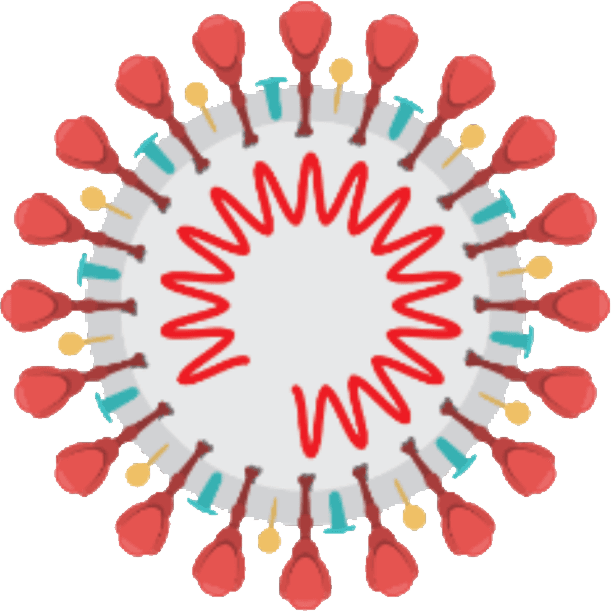
Typical virus
- Displays antigens across a repeating protein shell — the pattern the immune system responds to most strongly.
- Carries genetic material, which is what makes it infectious.
Technology
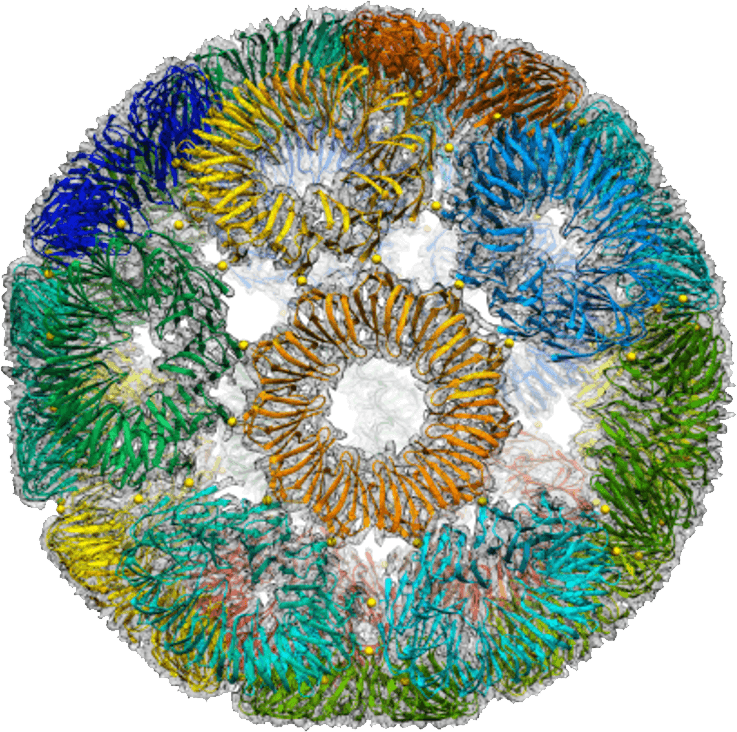
nCage's cage mimics the structure of a virus — the shape the immune system is built to recognise — without any of the genetic material that makes a virus infectious.
View our datanCage's science
TRAP-cages act as synthetic virus-like particle vaccines, driving a greater immune response and lasting protection for patients.
Comparison
Reference point

Current state of the art

nCage
01The virus-like structure is easily recognised by the body, and delivers a large number of antigens close together — which increases the immune response.
02Unlike viruses, synthetic VLPs are non-infectious, because they contain no genetic material.
Manufacture
Three steps, in order. Each one adds something the previous step made possible.
TRAP proteins are connected by gold links, which give the cage its stability.

Hooks and antigens are then attached to the cage.




The finished particle carries antigens on both the interior and the exterior of the cage.
Vaccination leading to a strong immune response
The case for VLPs
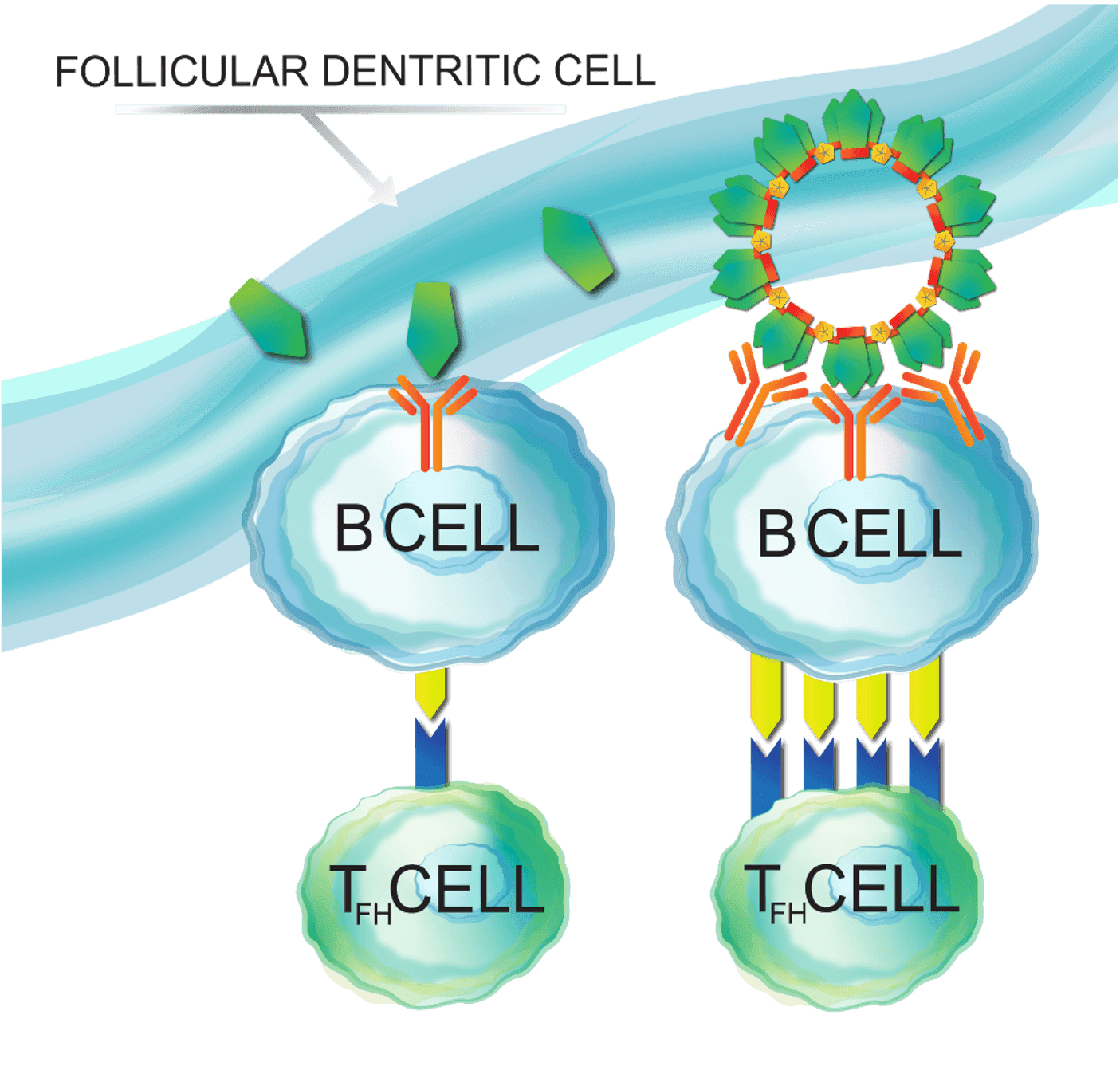
Compared with soluble protein vaccines, protein cages displaying antigen engage multiple receptors of B cells in germinal centres. Those B cells retrieve and process larger amounts of antigen and interact more strongly with follicular T helper cells.
The result is higher levels and longer duration of immunity.
An enhanced response matters most in elderly populations, where immunosenescence reduces responsiveness to conventional vaccines.
Naturally occurring VLPs have been developed into successful vaccines twice: Cervarix against human papillomavirus, and Recombivax HB against hepatitis B.
Synthetic VLPs work the same way as naturally occurring ones, but can be built for any virus.
Possible combination of antigens. Longer antibody persistence. Maximised antigen density. Easy manufacturing.
Expected advantages
 Fewer side effects
 Easier manufacturing
 Stronger immune response
 Possible vaccine combination
 Higher durability
 Broader coverage of variants
Synthetic VLP vaccines have the potential to dominate future vaccine manufacturing.
Peer-reviewed
Nature · Vol 569 · 16 May 2019
Malay, A. D., Miyazaki, N., Biela, A., Chakraborti, S., Majsterkiewicz, K., Stupka, I., Kaplan, C. S., Kowalczyk, A., Piette, B. M. A. G., Hochberg, G. K. A., Wu, D., Wrobel, T. P., Fineberg, A., Kushwah, M. S., Kelemen, M., Vavpetič, P., Pelicon, P., Kukura, P., Benesch, J. L. P., Iwasaki, K. & Heddle, J. G.